Sustained or suspended?
Posted in: Entrepreneur Tags: Entrepreneur, Humanity, leadership, organisation, sustainability
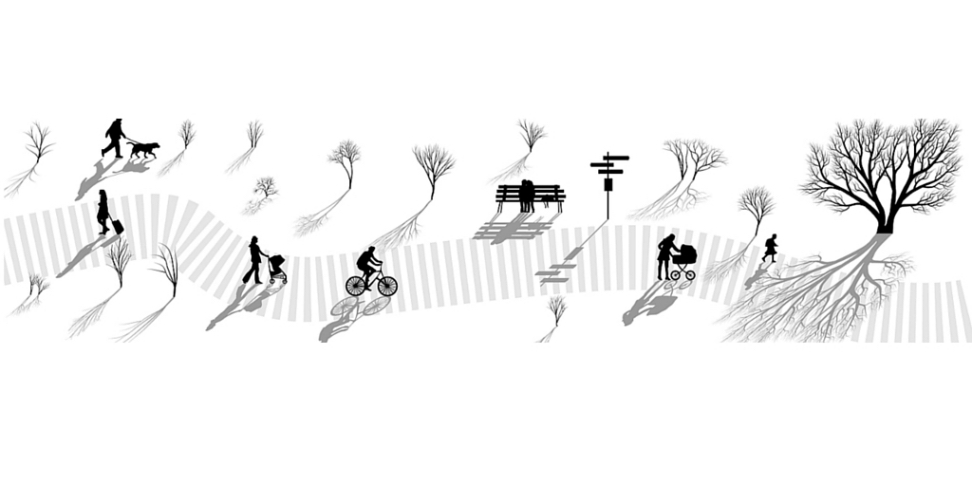
Some time ago I gave a talk in the US, as the event had to do with sustainability and leadership, I spoke about a continuum from the ‘disaster waiting to happen’ or being ‘suspended’ to having a good chance of sustaining an organisation’s existence for a long time.
I have looked inside large and small organisations and pondered on their DNA. What makes one company so much fun to work in and another a drag? While there are research and other documents out there [Collins and Porras: “Built to Last” as an example], this is based on my own experience and an image I found and altered when preparing for the talk.
In business one disease to avoid above all else is the “Spiral of Horror”. If you are within an organisation, which displays the symptoms of this difficult, but not wholly incurable, disease, I suggest you take a long hard look at the impact it has on you. After all, life is short and your humanity is precious.
Any and all resemblance to any one organisation I may or may not have worked for/in/on is purely coincidental. Most organisations display some of the symptoms and fight really hard against some of them.
Before I get to the symptoms, here are the key areas causing the symptoms, all a part of how a company acts:
- Disclosure: How it shares news [despite share market issues if public]?
- Relationships: How it engages with others? With what mindset?
- Issues: How it embraces changing environment and context?
- Structure: How it views ‘organisation’ and ‘ecosystem’?
- Leadership: How it enables thinking and acting?
- Intent: How it takes responsibility to delight?
- Doing good: How it enacts with purpose, for humanity’s benefit? (more…)
Vignette – how to on foresight – people knowledge central
Posted in: Foresight Tags: decision-making, how to, human, Humanity, organization, people, psychology, sociocultural, sociology, strategy, sustainability, understanding
MAKE THE SOCIOCULTURAL CONTEXT CENTRAL
Make the human context central to any strategic foresight activity. Do not be overly enamored with industry analysis, technology, or business trends and forget or overlook the role of people. Many activities produce impressive reams of data but haven’t thought through how the people affected would react or respond in the proposed future. Considering different sociocultural contexts can help the organization respond to a wider range of needs–be they demographic, sociological, ethnographic, physiological, psychological, etc.
Key steps
The analyst can help the organization see the importance of the sociocultural context and how it provides the baseline for understanding emerging needs and opportunities. Some leading organizations are forming Consumer or Customer Foresight/Insight programs. For example, Nokia has for about ten years been proactively using consumer foresight inputs in its development processes. These inputs are woven into the product development, design, and foresight/insight programs. This approach has been cited as one of the fundamental elements in Nokia’s improved position in the mobile phone market in the 1990s. (Steinbock, 2001)
Consumer-centered programs start with identifying trends in the cultural, sociological, psychological, ethnographic, and demographic arenas and exploring their implications for various organizational activities. In other cases, organizations hire firms to help them get a feel for what is going on, ranging from very deep explorations of the cultural context, using tools such as Integral Futures (Slaughter, 2003) or Causal Layered Analysis (Inayatullah, 2004), to the more surface-level approaches epitomized by “cool hunting.”
Several steps need to be followed in providing a cultural context for foresight work. A multidisciplinary “SWAT team” could be established with the skills to understand people, decision-making contexts, and the output context. The team collects trends either by searching themselves or working with one of the many capable brokers of trend information. Next, they analyze and prioritize the impacts of these trends. This information can then be communicated to the critical business processes where it is needed.
Benefits
Grounding the activity in an understanding of human behaviors and societal drivers is an underutilized approach. “Mainstream economics today views production as valuable primarily as a means to satisfy the needs and wants of consumers, but has taken a simple–some say, simplistic–approach to identifying those needs and wants.” (Goodwin, Ackerman, and Kiron, 1995, p. 31). Or as Farrell (1998, p. 14) suggests, “In business, waves of demand must be actively surfed, with an acute knowledge of whether the wave is building up or moving into churning, energy-wasting whitewater. The essence of a good ride is knowing when to get in and out and maximizing one’s advantage along the way.”
Understanding emerging needs as an element of the organization’s business system is crucial to right-timing its outputs and hence benefiting commercially. A challenge is that sociocultural inputs tend to be sourced with traditional market-research methods, which mostly highlight existing norms, values, and thoughts and overlook shifting contexts.
Example
The Beta vs. VHS competition among videotape manufacturers highlights the importance of correctly interpreting the sociocultural context. The Beta format focused on superior technical quality, while VHS focused on the usability of the technology in the broader context of the media industry and its customers. VHS won that battle. One fundamental problem with Beta was that it could not accommodate the length of a movie.
Another good example of inadequately considering sociocultural trends was the case of Nike and its production facilities in less-developed nations. After some of its contractors were found underpaying workers and using child labor, Nike suffered a media backlash and a slew of legal cases. The company’s phenomenal growth in profits in the late 1990s took a hard hit. Consumer backlashes can have devastating consequences, as Nike found.
Further reading
Beyer, H. and Holtzblatt, K. (1998). Contextual Design: Defining Customer-Centered Systems. Oxford, UK: Morgan Kaufman.
Farrell, W. (1998). How Hits Happen. New York: HarperBusiness.
Goodwin, N., Ackerman, F., and Kiron, D. (1997). The Consumer Society. Chicago, IL: Island Press.
Inayatullah, S. (ed.). (2004). The Causal Layered Analysis (CLA) Reader: Theory and Case Studies of an Integrative and Transformative Methodology. Taipei: Tamkang University Press.
Marsh, N., McAllum, M., and Purcell, D. (2002). Strategic Foresight: The Power of Standing in the Future. Melbourne: Crown Content.
Slaughter, R. (2003). Integral Futures: A New Model for Futures Enquiry and Practice. In Futures beyond Dystopia: Creating Social Foresight. London: Routledge. (Available at www.foresightinternational.com.au)
Steinbock, D. (2001). The Nokia Revolution: Success Factors of an Extraordinary Company. New York: AMACOM.
This vignette first appeared in “Thinking About the Future: Guidelines for Strategic Foresight”, edited by Andy Hines and Peter Bishop, published in 2006
Continuity vs. sustainability
Posted in: Humanity, Innovation Tags: champions, climate change, Continuity, heretics, navel gazing, repeatability, sustainability
Reinventing to survive
2007 seems to be the year that those who spent years on sustainability [environmental] and seemed to get very little public attention have finally been given a small thank you for their efforts. The spotlight is on climate change.
To sustain a business over changes in people inside and outside the organization, cultures, visions, technologies, competitive moves is not currently included in the ‘sustainability’ discussion but is part of the bigger picture. The business world talks about business continuity. What is not often obvious in the articles about business continuity is how companies go about that. The books “Good to Great” and “Built to Last” by Jim Collins et al provide examples and conclusions …. It is not clear though that those provide a utopian model to business. There is not yet a model, which provides an element of ‘guarantee’ for sustained existence over decades and perhaps centuries.
I could site Nokia as an example to learn something from. It was NOT a mobile phones company in 1865 when it was founded. But the story is perhaps well known. It is easy to downplay the fact that the executive and the board of the company completely changed the company’s industry many times over the last 140 years. It transitioned in stages always meaningful somehow to the old world and yet looking into a new horizon. The journey from a paper and pulp company to mobile phones is not obvious, even in hindsight let alone foresight.
From a business continuity point of view this means that real people made real decisions to go where no man had gone before, or just gently slid into expansions over time, which seemed rather natural extensions to the previous business, industry and model. Often both dramatic and smooth transitions are necessary for a company to survive over a long time. These move the company from the nurturing comfort of ‘others like us’ to ‘we’re going to have to figure this out for ourselves’.
It is odd then that the business schools have been teaching so many theories of business continuity, which really at some point kill the goose. Benchmarking [navel gazing], market research [quantified, history], competitive analysis [more navel gazing], etc
-
Latest
There are no recent tweets.
-
Posts on…
Site content Copyright © 2007- 2012 - Far Other Worlds - Dominique Jaurola